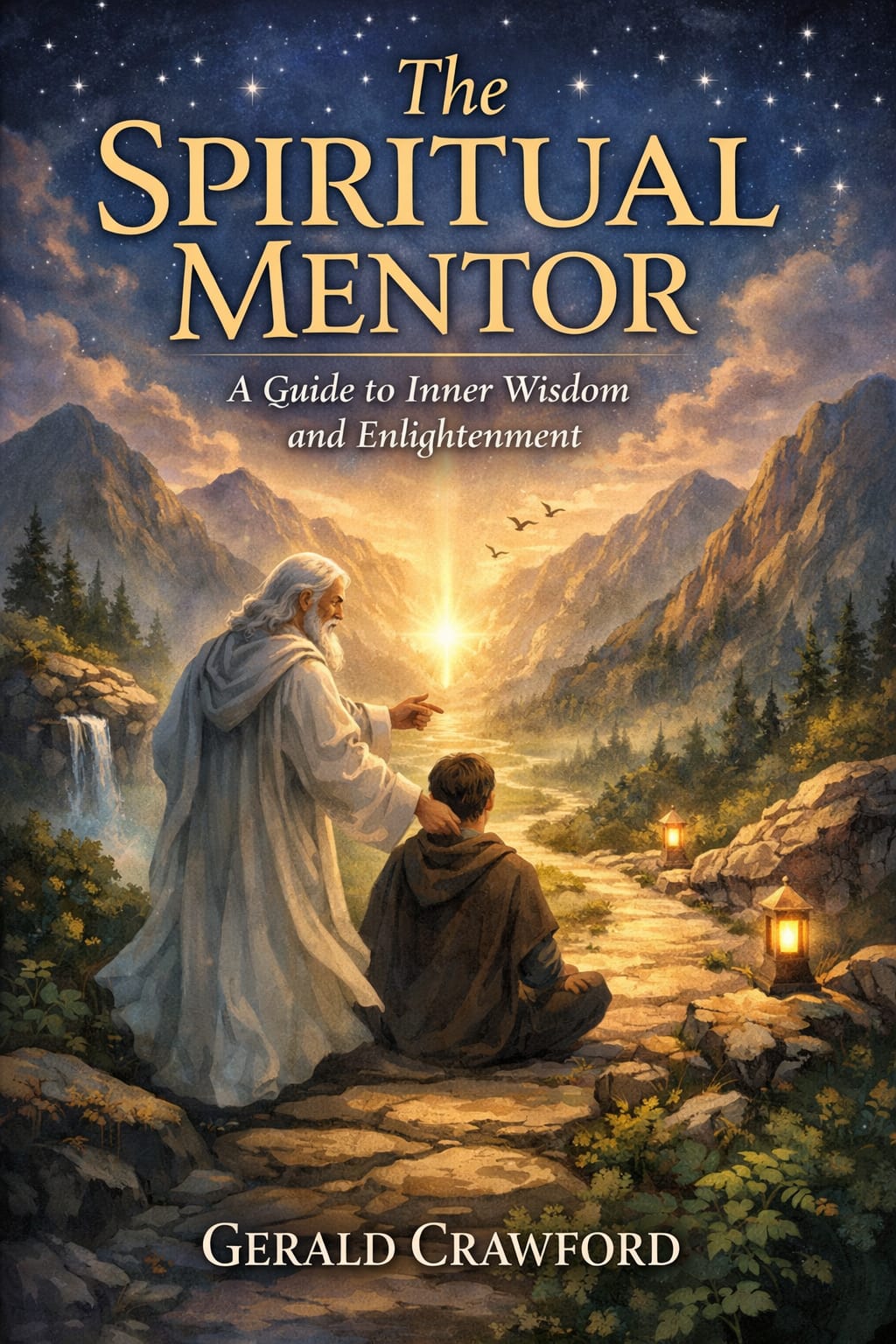
Spiritual mentorship is a relationship where we focus on fostering wisdom, personal development, and a deeper relationship with God.

Category: Free Will

Free Will

Free will is a complex and multifaceted concept that refers to the ability of individuals to make choices that are not entirely determined by external factors, such as genetics, environment, or past experiences.

In essence, free will implies that humans have the capacity for self-directed action, allowing them to choose between different options and shape their own lives. This concept is often associated with moral responsibility, as it suggests that individuals can be held accountable for their decisions and actions.

There are different perspectives on free will, and philosophers have debated its existence and nature for a long time. Here are some of the main arguments:

*Determinism vs. Indeterminism*: Determinists argue that every event, including human decisions and actions, is the inevitable result of prior causes and is therefore predetermined. In contrast, indeterminists believe that some events, including human choices, are not entirely determined by prior causes and are therefore free.

*Compatibilism vs. Incompatibilism*: Compatibilists argue that free will is compatible with determinism, and that free will can exist even if our choices are influenced by external factors. In compatibilists, on the other hand, argue that free will requires indeterminism and that determinism is incompatible with free will.

*Libertarianism*: Libertarians argue that free will requires indeterminism and that individuals have the ability to make choices that are not entirely determined by prior causes.

*Challenges to free will*: Some challenges to the concept of free will come from:

1. *Neuroscience*: Studies in neuroscience have shown that brain activity often precedes conscious awareness of a decision, suggesting that our choices may be determined by brain processes rather than conscious free will.
2. *Genetics*: Genetic factors can influence behavior and decision-making, raising questions about the extent to which our choices are truly free.
3. *Environmental factors*: Environmental factors, such as upbringing and social conditioning, can shape our choices and behavior, leading some to argue that our choices are not entirely free.

*Implications of free will*: The concept of free will has significant implications for:

1. *Moral responsibility*: If we have free will, we can be held accountable for our actions. If we don’t, it’s harder to justify moral responsibility.
2. *Personal autonomy*: Free will is essential for personal autonomy, as it allows individuals to make choices that reflect their own values and goals.
3. *Justice and punishment*: The concept of free will informs our understanding of justice and punishment, as it raises questions about the extent to which individuals can be held responsible for their actions.

In conclusion, the concept of free will is complex and multifaceted, with different perspectives and challenges. While there is no straightforward answer to what free will is, understanding the various arguments and implications can help us better appreciate the nature of human choice and agency.


The Concept of Free Will

The concept of free will is a complex and multifaceted idea that can be found in various domains, including:

1. Philosophy: The concept of free will has been debated by philosophers for centuries, with different schools of thought offering varying perspectives. For example, determinism argues that human behavior is entirely determined by prior causes, while indeterminism suggests that human decisions are not entirely predetermined.

2. Religion: Many religious traditions, such as Christianity, Islam, and Judaism, emphasize the concept of free will, suggesting that humans have the ability to make choices that can influence their spiritual destiny.

3. Psychology: Psychologists have studied the concept of free will in relation to human behavior, motivation, and decision-making. Some theories, like social learning theory, suggest that human behavior is shaped by external factors, while others, like self-determination theory, emphasize the role of intrinsic motivation and personal autonomy.

4. Neuroscience: Recent advancements in neuroscience have led to a greater understanding of the neural basis of decision-making and the extent to which our choices are influenced by brain activity. Some researchers argue that our brain activity can predict our decisions before we’re consciously aware of them, which challenges the concept of free will.

5. Ethics and Morality: The concept of free will is also closely tied to moral responsibility, as it implies that individuals can be held accountable for their actions. If humans have free will, then they can be praised or blamed for their decisions and actions.

6. Law and Justice: The concept of free will is also relevant in the context of law and justice, as it informs our understanding of criminal responsibility and the notion of personal accountability.

Some of the key historical figures who have contributed to the concept of free will include:

* Ancient Greek philosophers like Aristotle and Epicurus

* Medieval thinkers like Thomas Aquinas and William of Ockham

* Modern philosophers like René Descartes, John Locke, and Immanuel Kant

* Contemporary philosophers like Jean-Paul Sartre, Martin Heidegger, and Daniel Dennett

These are just a few examples of where the concept of free will can be found. The idea of free will remains a topic of ongoing debate and discussion across various disciplines.


From a spiritual perspective, the concept of free will is often intertwined with the idea of personal responsibility and the notion that our choices have consequences. Many spiritual traditions believe that individuals have the power to make choices that can shape their lives and determine their spiritual paths.

In some spiritual frameworks, free will is seen as a sacred gift that allows individuals to exercise their moral agency and make decisions that align with their values and principles. This perspective emphasizes the importance of personal accountability and the idea that our choices can lead to spiritual growth, learning, and self-improvement.

Some spiritual traditions also suggest that our choices are not entirely our own, but are influenced by factors such as karma, destiny, or divine will. For example, in some Eastern spiritual traditions, the concept of karma suggests that our past actions influence our present circumstances, and that our current choices can shape our future experiences.

In other spiritual perspectives, free will is seen as an illusion, and our choices are believed to be determined by external factors such as fate, providence, or the will of a higher power. This view can be found in some religious traditions, where the idea is that our lives are part of a larger plan or divine design.

Ultimately, the spiritual perspective on free will encourages individuals to reflect on their values, intentions, and motivations, and to consider the potential consequences of their choices. By doing so, individuals can cultivate a deeper sense of personal responsibility, spiritual awareness, and purpose.

Back a Buddy Show your Support